
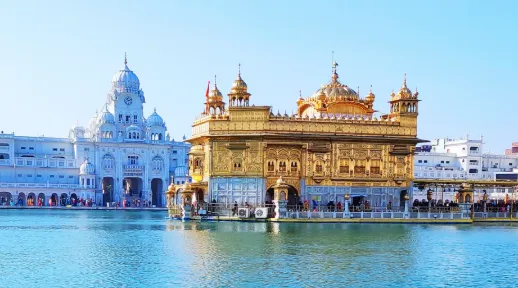
Although I had been to Amritsar before, I never had the chance to take the time to enjoy the food. This visit was unique, as I planned to walk the old lanes early in the morning, eat at places that have served food over generations, and relax throughout. I had four days to take my trip here, with one rule: stay in the centre and avoid planning more than two meals.
Amritsar is in northwestern Punjab, near the border with Pakistan, and is active day and night. Many streets near Hall Bazaar and Katra Ahluwalia are narrow and full of small shops. The same family has owned the most renowned restaurants for many years.
Starting well on the way to Amritsar
Because I planned to explore the city’s culinary options, I wanted to arrive rested. I looked for a business cabin on the flight into Delhi International Airport (DEL), also known as Indira Gandhi International Airport, since I couldn’t find a direct connection to Amritsar. The extra legroom made a difference, since I could stretch out and actually relax. Boarding was calm, and a hot meal came soon after takeoff.
I arrived feeling refreshed instead of exhausted before my onward travel to Amritsar. This helped on my first evening, as I went to the old town and had enough energy to explore. This trip had a lot of walking and eating. So, this felt like the right way to start my adventure.
Morning lanes in Amritsar
My first full day began early, along Heritage Street and the lanes leading toward the Golden Temple. Shopkeepers were raising shutters, and the smell of ghee drifted from half-open kitchens. I walked slowly, stopping wherever something was interesting.
Katra Ahluwalia is one of the most scenic places in the old city. There are narrow lanes between old palaces with sweet shops on either side. The area tends to be too busy in the afternoon, so I preferred the mornings when I could have a good look at the carved balconies without being pushed around.
Where I ate in Amritsar
My first real meal was at Kesar Da Dhaba, and it did not disappoint. It has served strictly vegetarian food since 1916 and is on a very busy street near Chowk Passian. I ordered dal, a stuffed paratha, and a bowl of phirni. The dal was thick and well-cooked, and the phirni was in a small clay bowl.
My next visit was to Bharawan Da Dhaba near Town Hall. Established in 1912, this dhaba serves famous kulcha thali and chole bhature. I arrived mid-morning and waited a short while before getting a table. The kulcha was served hot with chole and sour chutney, and I could see why locals keep coming back. J
Sweets and lassi in Amritsar
Gurdas Ram Jalebi Wala in Katra Ahluwalia is a small shop, and I ate there standing up. The jalebis were thick, crisp and still warm. A short walk away, Ahuja Milk Bhandar in Dhab Khatikan is the place for lassi. It arrived in a tall steel glass, creamy enough to count as a meal. I managed half and saved the rest for later. The evening was for relishing kesar-flavoured milk paired with the famous matka kulfi.
Practical notes for Amritsar
Winter from November to February is a popular season. Most popular spots will close by late evening, and kulcha stalls may run out of dough by afternoon. Try to get an early breakfast and wear comfortable walking shoes in the old lanes.
Keep small bills for stalls and rickshaws. The old city is comfortable to walk around, while auto rickshaws are ideal for longer rides to Ram Bagh or Jallianwala Bagh, both of which deserve a short visit between meals.
What Amritsar stayed with me
I didn’t leave without a few extra pounds, but I did leave happy. The best meals weren’t the most elaborate ones. They were the ones on a standard bench, as I observed local life and allowed the city to set the pace.
